
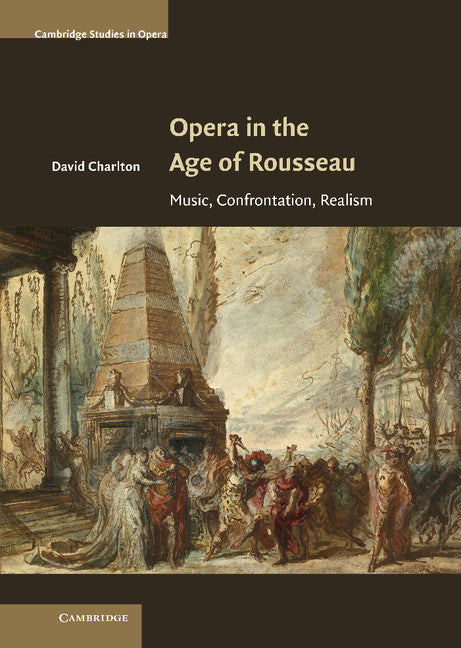
SALE Opera in the Age of Rousseau
Music, Confrontation, Realism
Author(s): David Charlton
Quantity
Pickup available at Cambridge University Press Bookshop
Usually ready in 24 hours
SALE Opera in the Age of Rousseau
Cambridge University Press Bookshop
1-2 Trinity Street
Cambridge CB2 1SZ
United Kingdom
🚚 Please note we can only ship within the UK.
FREE delivery on books (excluding sale).
Delivery for other items is £1.50 - £4.50, calculated at checkout.
T&Cs apply.
Free click & collect on all orders.
This book is unused and unread. It has some cosmetic imperfections such as scuffing, creasing or fading.
This book cannot be discounted further.
Historians of French politics, art, philosophy and literature have long known the tensions and fascinations of Louis XV's reign, the 1750s in particular. David Charlton's study comprehensively re-examines this period, from Rameau to Gluck and elucidates the long-term issues surrounding opera. Taking Rousseau's Le Devin du Village as one narrative centrepiece, Charlton investigates this opera's origins and influences in the 1740s and goes on to use past and present research to create a new structural model that explains the elements of reform in Gluck's tragédies for Paris. Charlton's book opens many new perspectives on the musical practices and politics of the period, including the Querelle des Bouffons. It gives the first detailed account of intermezzi and opere buffe performed by Eustachio Bambini's troupe at the Paris Opéra from August 1752 to February 1754 and discusses Rameau's comedies Platée and Les Paladins and their origins.

Choose options