
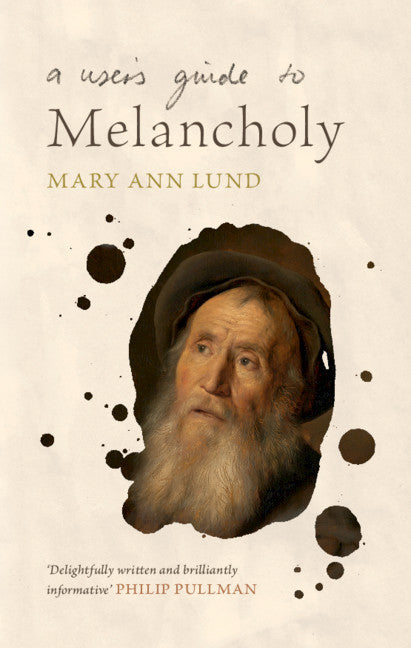
SALE A User's Guide to Melancholy
Author(s): Mary Ann Lund
Quantity
Pickup available at Cambridge University Press Bookshop
Usually ready in 24 hours
SALE A User's Guide to Melancholy
Cambridge University Press Bookshop
1-2 Trinity Street
Cambridge CB2 1SZ
United Kingdom
🚚 Please note we can only ship within the UK.
FREE delivery on books (excluding sale).
Delivery for other items is £1.50 - £4.50, calculated at checkout.
T&Cs apply.
Free click & collect on all orders.
This book is unused and unread. It has some cosmetic imperfections such as scuffing, creasing or fading. The dust jacket is damaged.
This book cannot be discounted further.
A User's Guide to Melancholy takes Robert Burton's encyclopaedic masterpiece The Anatomy of Melancholy (first published in 1621) as a guide to one of the most perplexing, elusive, attractive, and afflicting diseases of the Renaissance. Burton's Anatomy is perhaps the largest, strangest, and most unwieldy self-help book ever written. Engaging with the rich cultural and literary framework of melancholy, this book traces its causes, symptoms, and cures through Burton's writing. Each chapter starts with a case study of melancholy - from the man who was afraid to urinate in case he drowned his town to the girl who purged a live eel - as a way into exploring the many facets of this mental affliction. A User's Guide to Melancholy presents in an accessible and illustrated format the colourful variety of Renaissance melancholy, and contributes to contemporary discussions about wellbeing by revealing the earlier history of mental health conditions.

Choose options