
Practices of Reparations in International Criminal Justice
Author(s): Christoph Sperfeldt
Quantity
Pickup available at Cambridge University Press Bookshop
Usually ready in 24 hours
Practices of Reparations in International Criminal Justice
Cambridge University Press Bookshop
1-2 Trinity Street
Cambridge CB2 1SZ
United Kingdom
🚚 Please note we can only ship within the UK.
FREE delivery on books (excluding sale).
Delivery for other items is £1.50 - £4.50, calculated at checkout.
T&Cs apply.
Free click & collect on all orders.
|
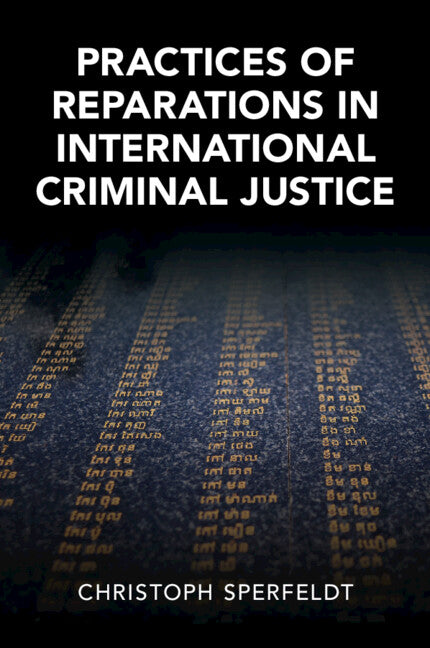
Combining interdisciplinary techniques with original ethnographic fieldwork, Christoph Sperfeldt examines the first attempts of international criminal courts to provide reparations to victims of mass atrocities. The observations focus on two case studies: the Extraordinary Chambers in the Courts of Cambodia, where Sperfeldt spent over ten years working at and around, and the International Criminal Court's interventions in the Democratic Republic of Congo. Enriched with first-hand observations and an awareness of contextual dynamics, this book directs attention to the 'social life of reparations' that too often get lost in formal accounts of law and its institutions. Sperfeldt shows that reparations are constituted and contested through a range of practices that produce, change, and give meaning to reparations. Appreciating the nature and effects of these practices provides us with a deeper understanding of the discrepancies that exist between the reparations ideal and how it functions imperfectly in different contexts. |

Choose options