
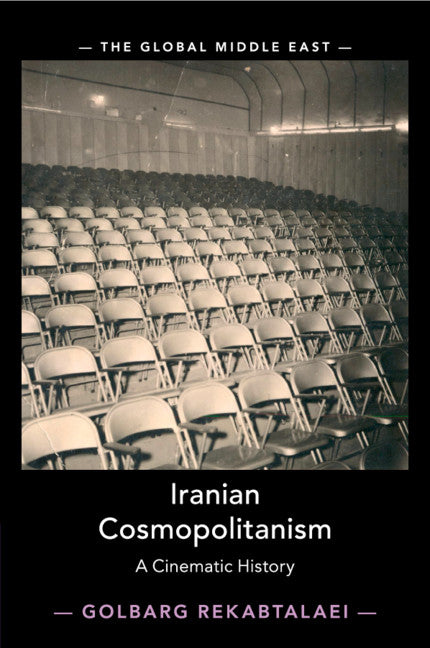
Iranian Cosmopolitanism
A Cinematic History
Author(s): Golbarg Rekabtalaei
Quantity
Pickup available at Cambridge University Press Bookshop
Usually ready in 24 hours
Iranian Cosmopolitanism
Cambridge University Press Bookshop
1-2 Trinity Street
Cambridge CB2 1SZ
United Kingdom
🚚 Please note we can only ship within the UK.
FREE delivery on books (excluding sale).
Delivery for other items is £1.50 - £4.50, calculated at checkout.
T&Cs apply.
Free click & collect on all orders.
From popular and 'New Wave' pre-revolutionary films of Fereydoon Goleh and Abbas Kiarostami to post-revolutionary films of Mohsen Makhmalbaf, the Iranian cinema has produced a range of films and directors that have garnered international fame and earned a global following. Golbarg Rekabtalaei takes a unique look at Iranian cosmopolitanism and how it transformed in the Iranian imagination through the cinematic lens. By examining the development of Iranian cinema from the early twentieth century to the revolution, Rekabtalaei locates discussions of modernity in Iranian cinema as rooted within local experiences, rather than being primarily concerned with Western ideals or industrialisation. Her research further illustrates how the ethnic, linguistic, and religious diversity of Iran's citizenry shaped a heterogeneous culture and a cosmopolitan cinema that was part and parcel of Iran's experience of modernity. In turn, this cosmopolitanism fed into an assertion of sovereignty and national identity in a modernising Iran in the decades leading up to the revolution.
- Proposes a re-reading of cinematic history to shed fresh light on the cultural and political history of Iran
- Shows how Iranian modernity was linked to social and cultural cosmopolitanism
- Draws on a wide array of original language primary sources

Choose options