
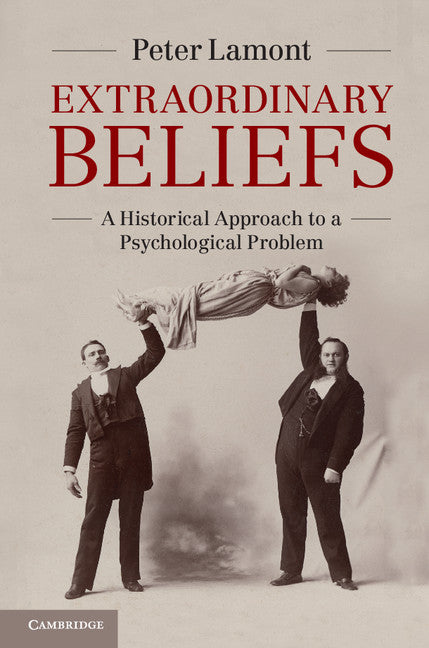
Extraordinary Beliefs
A Historical Approach to a Psychological Problem
Author(s): Peter Lamont
Quantity
Pickup available at Cambridge University Press Bookshop
Usually ready in 24 hours
Extraordinary Beliefs
Cambridge University Press Bookshop
1-2 Trinity Street
Cambridge CB2 1SZ
United Kingdom
🚚 Please note we can only ship within the UK.
FREE delivery on books (excluding sale).
Delivery for other items is £1.50 - £4.50, calculated at checkout.
T&Cs apply.
Free click & collect on all orders.
Since the early nineteenth century, mesmerists, mediums and psychics have exhibited extraordinary phenomena. These have been demonstrated, reported and disputed by every modern generation. We continue to wonder why people believe in such things, while others wonder why they are dismissed so easily. Extraordinary Beliefs takes a historical approach to an ongoing psychological problem: why do people believe in extraordinary phenomena? It considers the phenomena that have been associated with mesmerism, spiritualism, psychical research and parapsychology. By drawing upon conjuring theory, frame analysis and discourse analysis, it examines how such phenomena have been made convincing in demonstration and report, and then disputed endlessly. It argues that we cannot understand extraordinary beliefs unless we properly consider the events in which people believe, and what people believe about them. And it shows how, in constructing and maintaining particular beliefs about particular phenomena, we have been in the business of constructing ourselves.
- Examines both belief and disbelief in extraordinary phenomena
- Discusses how extraordinary phenomena were made convincing by those who demonstrated them and by those who reported them
- Provides a new understanding of extraordinary phenomena, beliefs about them, and the wider psychological relevance of their production and reception, past and present

Choose options