
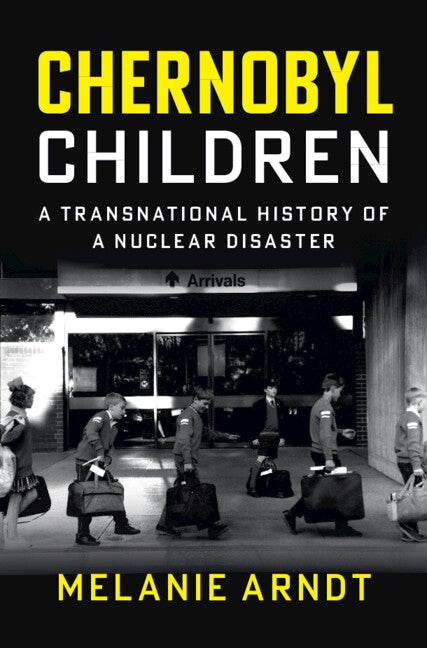
Chernobyl Children
A Transnational History of a Nuclear Disaster
Author(s): Melanie Arndt, Translated by Alastair Matthews
Quantity
Pickup available at Cambridge University Press Bookshop
Usually ready in 24 hours
Chernobyl Children
Cambridge University Press Bookshop
1-2 Trinity Street
Cambridge CB2 1SZ
United Kingdom
🚚 Please note we can only ship within the UK.
FREE delivery on books (excluding sale).
Delivery for other items is £1.50 - £4.50, calculated at checkout.
T&Cs apply.
Free click & collect on all orders.
In the wake of the Chernobyl nuclear disaster, more than a million Belarusian, Ukrainian, and Russian children were sent abroad. Aided by the unprecedented efforts of transnational NGOs and private individuals, these children were meant to escape and recover from radiation exposure, but also from the increasing hardships of everyday life in post-Soviet society. Through this opening of the Soviet Union, hundreds of thousands of people in over forty countries witnessed the ecological, medical, social and political consequences of the disaster for the human beings involved. This awareness transformed the accident into a global catastrophe which could happen anywhere and have widespread impact. In this brilliantly insightful work, Melanie Arndt demonstrates that the Chernobyl children were both witness to and representative of a vanishing bipolar world order and the future of life in the Anthropocene, an age in which the human impact on the planet is increasingly borderless.
- An interdisciplinary analysis of a global disaster and the role of non-state actors in its aftermath
- Demonstrates the impact of industrial disasters on everyday life
- Brings together ecological and human histories

Choose options