
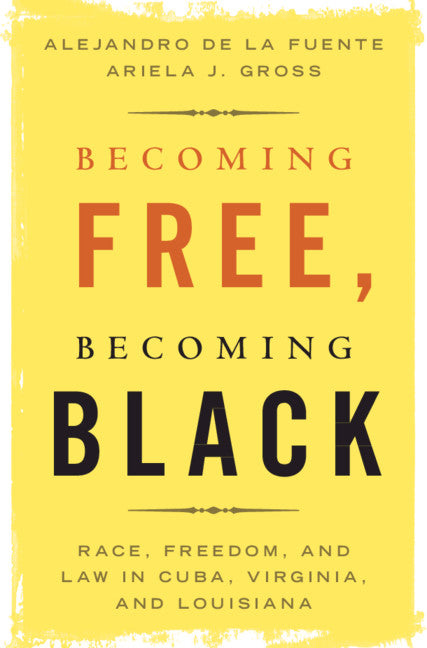
Becoming Free, Becoming Black: Race, Freedom, and Law in Cuba, Virginia, and Louisiana
Author(s): Alejandro de la Fuente
Quantity
Pickup available at Cambridge University Press Bookshop
Usually ready in 24 hours
Becoming Free, Becoming Black: Race, Freedom, and Law in Cuba, Virginia, and Louisiana
Cambridge University Press Bookshop
Pickup available, Usually ready in 24 hours
1-2 Trinity Street
Cambridge CB2 1SZ
United Kingdom
🚚 Please note we can only ship within the UK.
FREE delivery on books (excluding sale).
Delivery for other items is £1.50 - £4.50, calculated at checkout.
T&Cs apply.
Free click & collect on all orders.
How did Africans become 'blacks' in the Americas? Becoming Free, Becoming Black tells the story of enslaved and free people of color who used the law to claim freedom and citizenship for themselves and their loved ones. Their communities challenged slaveholders' efforts to make blackness synonymous with slavery. Looking closely at three slave societies - Cuba, Virginia, and Louisiana - Alejandro de la Fuente and Ariela J. Gross demonstrate that the law of freedom - not slavery - established the meaning of blackness in law. Contests over freedom determined whether and how it was possible to move from slave to free status, and whether claims to citizenship would be tied to racial identity. Laws regulating the lives and institutions of free people of color created the boundaries between black and white, the rights reserved to white people, and the degradations imposed only on black people.

Choose options