
AI Development and the ‘Fuzzy Logic' of Chinese Cyber Security and Data Laws
Author(s): Max Parasol
Quantity
Pickup available at Cambridge University Press Bookshop
Usually ready in 24 hours
AI Development and the ‘Fuzzy Logic' of Chinese Cyber Security and Data Laws
Cambridge University Press Bookshop
1-2 Trinity Street
Cambridge CB2 1SZ
United Kingdom
🚚 Please note we can only ship within the UK.
FREE delivery on books (excluding sale).
Delivery for other items is £1.50 - £4.50, calculated at checkout.
T&Cs apply.
Free click & collect on all orders.
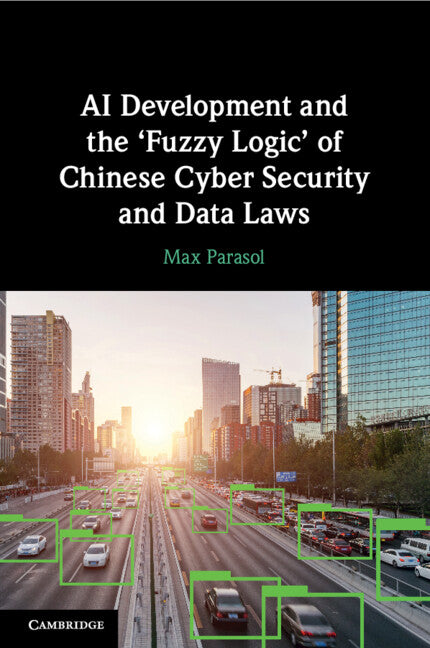
The book examines the extent to which Chinese cyber and network security laws and policies act as a constraint on the emergence of Chinese entrepreneurialism and innovation. Specifically, how the contradictions and tensions between data localisation laws (as part of Network Sovereignty policies) affect innovation in artificial intelligence (AI). The book surveys the globalised R&D networks, and how the increasing use of open-source platforms by leading Chinese AI firms during 2017–2020, exacerbated the apparent contradiction between Network Sovereignty and Chinese innovation. The drafting of the Cyber Security Law did not anticipate the changing nature of globalised AI innovation. It is argued that the deliberate deployment of what the book refers to as 'fuzzy logic' in drafting the Cyber Security Law allowed regulators to subsequently interpret key terms regarding data in that Law in a fluid and flexible fashion to benefit Chinese innovation.
- Explains how China's innovation system works
- Discusses how Chinese entrepreneurs understand the ('fuzzy logic') innovation system
- Provides a clear roadmap for the prospects of China's AI development, within the bounds of China's data laws for the reader

Choose options