
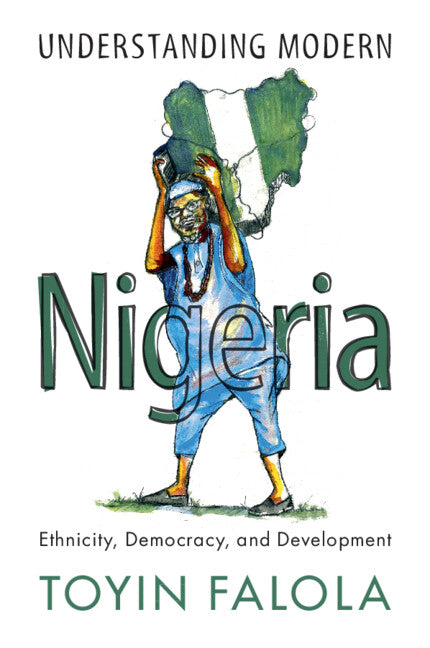
Understanding Modern Nigeria
Ethnicity, Democracy, and Development
Author(s): Toyin Falola
Quantity
Pickup available at Cambridge University Press Bookshop
Usually ready in 24 hours
Understanding Modern Nigeria
Cambridge University Press Bookshop
Pickup available, Usually ready in 24 hours
1-2 Trinity Street
Cambridge CB2 1SZ
United Kingdom
🚚 Please note we can only ship within the UK.
FREE delivery on books (excluding sale).
Delivery for other items is £1.50 - £4.50, calculated at checkout.
T&Cs apply.
Free click & collect on all orders.
Since its independence from Britain in 1960, Nigeria has emerged as Africa's second largest economy and one of the biggest producers of oil in the world. Despite its economic success, however, there are deep divisions among its two hundred and fifty ethnic groups. Centered around three of the dominant themes of Nigeria's post-colonial narrative - ethnicity, democracy and governance, this is an accessible and comprehensive introduction to the history and events that have shaped these three areas. World-renowned expert in Nigerian history, Toyin Falola shows us how the British laid the foundations of modern Nigeria, with colonialism breading competition for resources and power and the widening cleavages between the Hausa-Fulani, Yoruba, and Igbo ethnic groups that had been forced together under British rule, the choice of federalism as a political system, and the religious and political pluralism that have shaped its institutions and practices. Using an examination of the outcomes of this history, manifested in hunger, violence, poverty, human rights violations, threats of secession and corruption, where power and resources are used to reproduce underdevelopment, Falola offers insights and recommendations for the future of policy and the potential for intervention in the country.

Choose options
Understanding Modern Nigeria
Sale price£46.00 GBP