
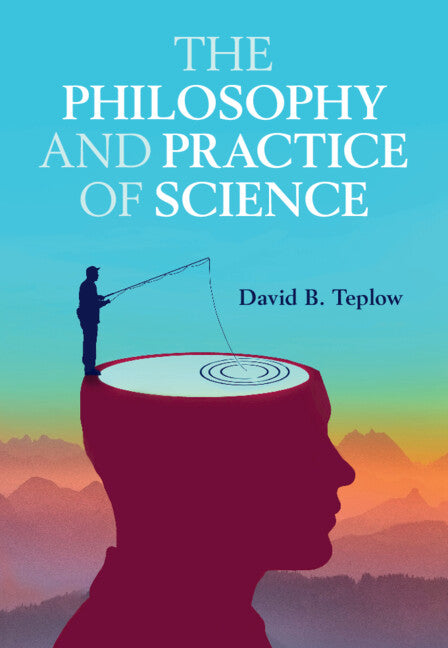
The Philosophy and Practice of Science
Author(s): David B. Teplow
Quantity
Pickup available at Cambridge University Press Bookshop
Usually ready in 24 hours
The Philosophy and Practice of Science
Cambridge University Press Bookshop
1-2 Trinity Street
Cambridge CB2 1SZ
United Kingdom
🚚 Please note we can only ship within the UK.
FREE delivery on books (excluding sale).
Delivery for other items is £1.50 - £4.50, calculated at checkout.
T&Cs apply.
Free click & collect on all orders.
This book is a novel synthesis of the philosophy and practice of science, covering its diverse theoretical, metaphysical, logical, philosophical, and practical elements. The process of science is generally taught in its empirical form: what science is, how it works, what it has achieved, and what it might achieve in the future. What is often absent is how to think deeply about science and how to apply its lessons in the pursuit of truth, in other words, knowing how to know. In this volume, David Teplow presents illustrative examples of science practice, history and philosophy of science, and sociological aspects of the scientific community, to address commonalities among these disciplines. In doing so, he challenges cherished beliefs and suggests to students, philosophers, and practicing scientists new, epistemically superior, ways of thinking about and doing science.
- Aims to remedy the fact that most students, and even some professors, have only a superficial appreciation of the historical and philosophical principles upon which their work is based
- Provides a detailed historical account of the development of the “scientific method” from the philosophy of the Ancient Greeks to the present day
- Discusses how one should think about and the 'hows' and 'whys' of doing science, for the mutual benefit of both scientists and philosophers
- Discusses and exemplifies the epistemology and sociology of science, for readers to appreciate the huge impact non-scientific factors have in all aspects of science practice

Choose options