
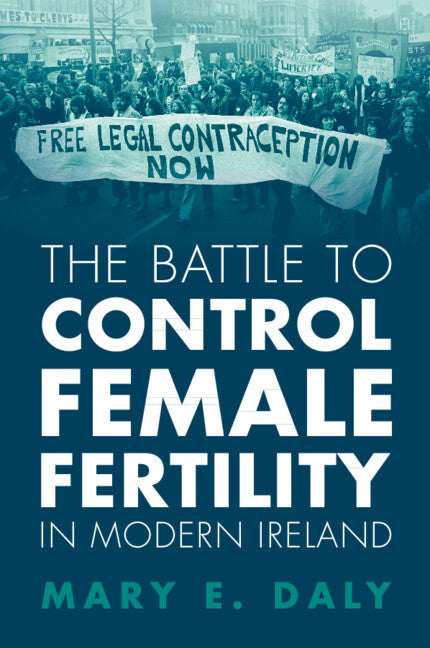
The Battle to Control Female Fertility in Modern Ireland
Author(s): Mary E. Daly
Quantity
Pickup available at Cambridge University Press Bookshop
Usually ready in 24 hours
The Battle to Control Female Fertility in Modern Ireland
Cambridge University Press Bookshop
1-2 Trinity Street
Cambridge CB2 1SZ
United Kingdom
🚚 Please note we can only ship within the UK.
FREE delivery on books (excluding sale).
Delivery for other items is £1.50 - £4.50, calculated at checkout.
T&Cs apply.
Free click & collect on all orders.
The Irish battle for legal contraception was a contest over Irish exceptionalism: the belief that Ireland could resist global trends despite the impact of second-wave feminism, falling fertility, and a growing number of women travelling for abortion. It became so lengthy and so divisive because it challenged key tenets of Irish identity: Catholicism, large families, traditional gender roles, and sexual puritanism. The Catholic Church argued that legalising contraception would destroy this way of life, and many citizens agreed. The Battle to Control Female Fertility in Modern Ireland provides new insights on Irish masculinity and fertility control. It highlights women's activism in both liberal and conservative camps, and the consensus between the Catholic and Protestant churches views on contraception for single people. It also shows how contraception and the Pro-Life Amendment campaign affected policy towards Northern Ireland, and it examines the role of health professionals, showing how hospital governance prevented female sterilisation. It is a story of gender, religion, social change, and failing efforts to reaffirm Irish moral exceptionalism.

Choose options