
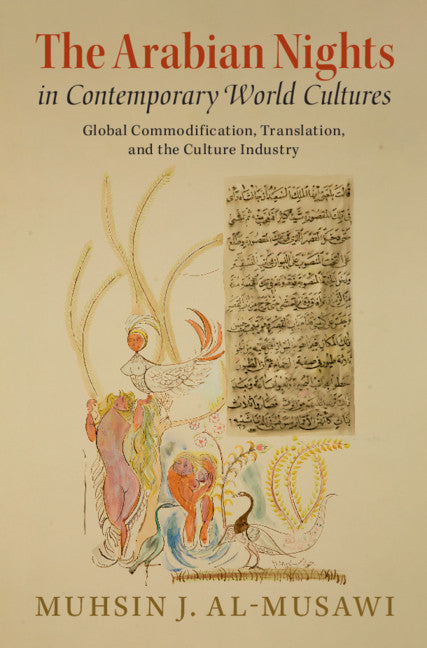
The Arabian Nights in Contemporary World Cultures
Global Commodification, Translation, and the Culture Industry
Author(s): Muhsin J. al-Musawi
Quantity
Pickup available at Cambridge University Press Bookshop
Usually ready in 24 hours
The Arabian Nights in Contemporary World Cultures
Cambridge University Press Bookshop
Pickup available, Usually ready in 24 hours
1-2 Trinity Street
Cambridge CB2 1SZ
United Kingdom
🚚 Please note we can only ship within the UK.
FREE delivery on books (excluding sale).
Delivery for other items is £1.50 - £4.50, calculated at checkout.
T&Cs apply.
Free click & collect on all orders.
The stories in the Thousand and One Nights, or the Arabian Nights, are familiar to many of us: from the tales of Aladdin, Sinbad the Sailor, Ali Baba and his forty thieves, to the framing story of Scheherazade telling these stories to her homicidal husband, Shahrayar. This book offers a rich and wide-ranging analysis of the power of this collection of tales that penetrates so many cultures and appeals to such a variety of predilections and tastes. It also explores areas that were left untouched, like the decolonization of the Arabian Nights, and its archaeologies. Unique in its excavation into inroads of perception and reception, Muhsin J. al-Musawi's book unearths means of connection with common publics and learned societies. Al-Musawi shows, as never before, how the Arabian Nights has been translated, appropriated, and authenticated or abused over time, and how its reach is so expansive as to draw the attention of poets, painters, illustrators, translators, editors, musicians, political scientists like Leo Strauss, and novelists like Michel Butor, James Joyce and Marcel Proust amongst others. Making use of documentaries, films, paintings, novels and novellas, poetry, digital forums and political jargon, this book offers nuanced understanding of the perennial charm and power of this collection.

Choose options
The Arabian Nights in Contemporary World Cultures
Sale price£38.00 GBP