
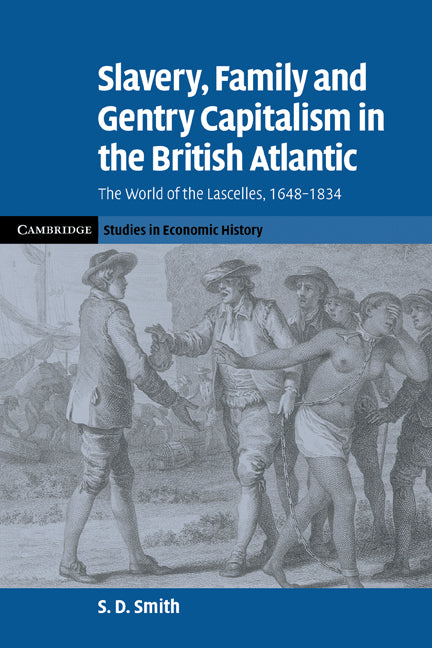
Slavery, Family, and Gentry Capitalism in the British Atlantic: The World of the Lascelles, 1648-1834
Author(s): S. D. Smith
Quantity
Pickup available at Cambridge University Press Bookshop
Usually ready in 24 hours
Slavery, Family, and Gentry Capitalism in the British Atlantic: The World of the Lascelles, 1648-1834
Cambridge University Press Bookshop
Pickup available, Usually ready in 24 hours
1-2 Trinity Street
Cambridge CB2 1SZ
United Kingdom
🚚 Please note we can only ship within the UK.
FREE delivery on books (excluding sale).
Delivery for other items is £1.50 - £4.50, calculated at checkout.
T&Cs apply.
Free click & collect on all orders.
From the mid-seventeenth century to the 1830s, successful gentry capitalists created an extensive business empire centered on slavery in the West Indies, but inter-linked with North America, Africa, and Europe. S. D. Smith examines the formation of this British Atlantic World from the perspective of Yorkshire aristocratic families who invested in the West Indies. At the heart of the book lies a case study of the plantation-owning Lascelles and the commercial and cultural network they created with their associates. The Lascelles exhibited high levels of business innovation and were accomplished risk-takers, overcoming daunting obstacles to make fortunes out of the New World. Dr Smith shows how the family raised themselves first to super-merchant status and then to aristocratic pre-eminence. He also explores the tragic consequences for enslaved Africans with chapters devoted to the slave populations and interracial relations. This widely researched book sheds new light on the networks and the culture of imperialism.

Choose options
Slavery, Family, and Gentry Capitalism in the British Atlantic: The World of the Lascelles, 1648-1834
Sale price£39.20 GBP
Regular price£49.00 GBP