
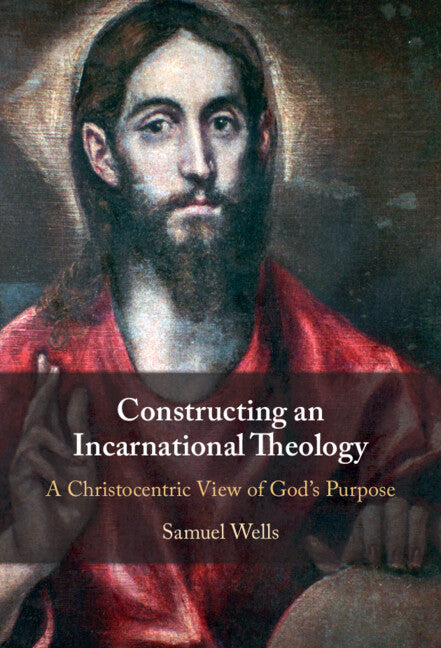
Constructing an Incarnational Theology
Author(s): Samuel Wells
Quantity
Pickup available at Cambridge University Press Bookshop
Usually ready in 24 hours
Constructing an Incarnational Theology
Cambridge University Press Bookshop
1-2 Trinity Street
Cambridge CB2 1SZ
United Kingdom
🚚 Please note we can only ship within the UK.
FREE delivery on books (excluding sale).
Delivery for other items is £1.50 - £4.50, calculated at checkout.
T&Cs apply.
Free click & collect on all orders.
Why did Jesus come? The traditional argument is that he came to redeem us from sin and destroy death, and thus reverse the fall. Many have long found this unsatisfactory, because it centres human deficit, rather than divine abundance. In this study, Samuel Wells traces his notion of 'being with' right into the Trinity itself, and in dialogue with Maximus the Confessor, Duns Scotus and Karl Barth, among others, articulates a truly Christocentric theology in which God's means and God's ends are identical. In the process, Wells not only greatly expands the compass of 'being with,' showing its scriptural and doctrinal significance, but also offers a constructive account of the incarnation, cross and resurrection of Jesus that out-narrates conventional atonement theories. Wells correspondingly proposes an account of sin, evil, suffering and death that accords with this revised understanding. The result is a compelling and transformational proposal in incarnational theology.
- Pursues a foundational theological question to its conclusion in serious and creative ways
- Connects the author's extensive work on being with to mainstream theology
- Walks through key theological themes in a thoroughly Christocentric and abundant way

Choose options